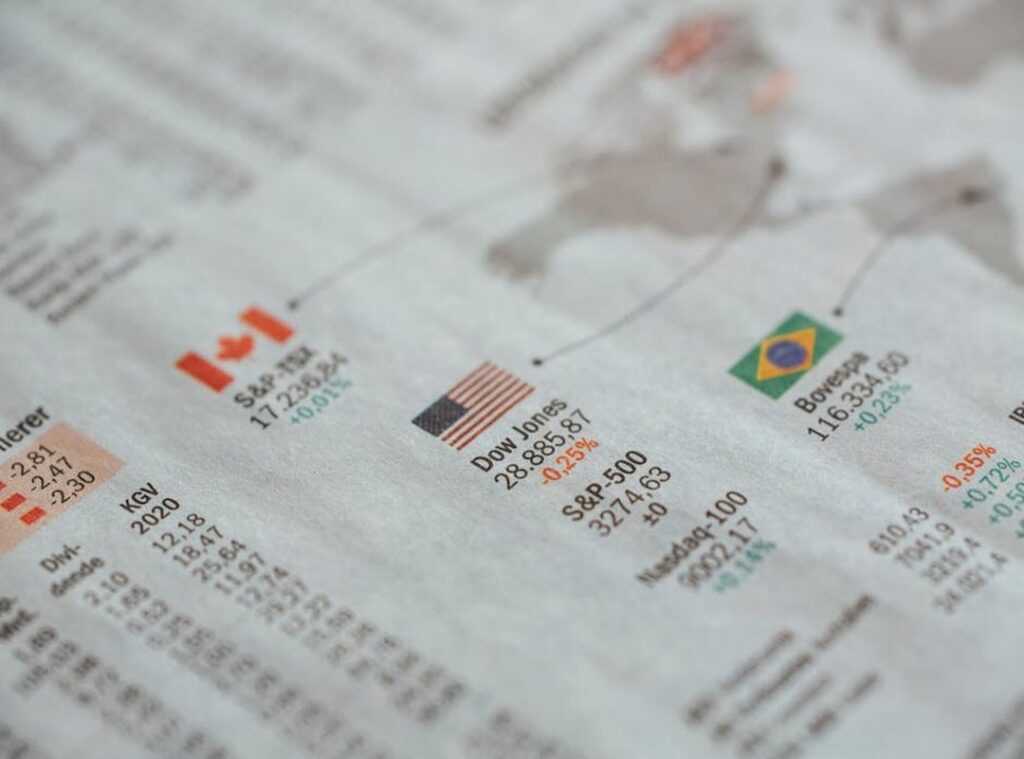
You stare at the dashboard.
It says “updated 17 hours ago.”
You know that number is already wrong.
And you’re not even sure what “updated” means here. Trading data? Earnings filings?
Regulatory alerts? Who knows. It’s all mashed together.
Or worse (missing) entirely.
I’ve watched people make real decisions off that mess.
Then watch them scramble when the numbers shift overnight.
This isn’t about better charts.
It’s about knowing what changed, why it matters, and what to do next. Before the market moves.
I’ve spent years pulling live signals from markets, central banks, SEC filings, and institutional feeds. Not just collecting them. Connecting them.
Most so-called financial updates are just noise with timestamps.
This article cuts through that. No tool worship. No jargon.
Just how Financial News Aggr8finance actually works as a system. Not a feed, not a dashboard, but a working layer of context.
You’ll see exactly how it surfaces what’s urgent, filters out the filler, and ties raw data to real action.
No theory.
Just what I’ve seen work (across) hedge funds, compliance teams, and solo analysts who can’t afford lag.
Read this. Then go check your dashboard again.
Standard Feeds Lie. Aggr8finance Doesn’t.
I used Bloomberg Terminal alerts for seven years. Then I saw how often they got the timing wrong. Or missed the why.
Or buried a real signal under ten layers of noise.
Aggr8finance isn’t another feed. It’s a filter (one) that actually works.
Standard feeds push everything at once. Aggr8finance waits. It cross-checks three sources before it even thinks about alerting you.
Raw data comes in first. Then it’s matched against regulatory filings, supply chain notices, and pension fund disclosures (not) just press releases. Then a human tags context.
Not “earnings miss.” But “earnings miss after two supplier audits failed and their largest customer paused orders.”
Here’s what that looks like in practice: A mid-cap chipmaker cuts guidance. Bloomberg flashes it at 4:02 p.m. EST.
No peer comparison. No sector score. Just the number.
Aggr8finance surfaces it at 4:17 p.m. (with) side-by-side revisions from two peers, a sector impact score of -2.3, and a footnote linking to a recent FTC enforcement notice targeting that firm’s overseas factory.
That delay? It’s not slowness. It’s verification.
Most people don’t realize how much noise comes from where the data originates. Traditional wires ignore pension fund allocation shifts. They skip supply chain disclosures.
Aggr8finance treats those as primary signals. Not footnotes.
Financial News Aggr8finance is the only feed I trust when my own money’s on the line.
You ever get an alert and immediately think: Wait. Why does this matter right now?
Yeah. That’s why you need this.
The 4 Financial Updates You’re Blind To
I check dashboards every morning. Most of them miss the same four things. Every single time.
(1) Regulatory & Compliance Updates
These aren’t just press releases. They’re rule changes that flip your risk exposure overnight. Standard dashboards treat them like blog posts.
Not triggers for immediate policy review. You’ll rebalance your portfolio after the SEC filing, not before.
(2) Institutional Position Shifts
Big funds slowly rotate out of sectors. Your system waits for the 13F filing. Three months late.
That lag kills liquidity planning. I’ve watched teams scramble because they didn’t see the hedge fund exit until it hit Bloomberg.
(3) Credit Event Triggers
A covenant breach. A rating watch. A payment delay buried in a footnote.
Most systems ignore it until the downgrade hits. One client missed a $28M exposure because their vendor flagged the event four days after it occurred. Financial News Aggr8finance caught it 72 hours earlier (same) source, different parsing.
You can read more about this in News business aggr8finance.
(4) Macro-Linked Micro-Indicators
Freight rates spiking? That’s not logistics news. It’s export finance stress.
Dashboards silo this data. Real decisions need it connected.
These aren’t alerts. They’re leading indicators. And if your feed doesn’t surface them before consensus forms.
You’re already behind.
How to Read Updates Like a Skeptic

I used to trust every “Confirmed” label. Then I lost money on a “Confirmed” earnings revision that turned out to be a typo in a Bloomberg terminal feed.
“Confirmed” means someone with access signed off on it. Not that it’s right. “Emerging” means two or three sources whispering the same thing. But nobody’s named names yet. “Contextual” means it fits with other data, even if no one’s verified it directly. “Tentative”?
Run. Or at least wait for the next update.
Time stamps lie. A press release says “10:42 AM”. But the SEC filing it references is dated three days ago.
That “as-of” date matters more than the publish time. Always check it.
A cluster of low-confidence updates across energy, tech, and banking? That’s not noise. That’s the system coughing before a fever hits.
I saw this happen before the 2022 rate pivot. And ignored it. Big mistake.
Before acting on any update, ask yourself:
- What’s the primary source? (Not the aggregator. The original.)
- Has it been corroborated by a second independent channel?
I keep this checklist taped to my monitor. (Yes, real tape. No digital version.)
You’ll find these patterns baked into how News Business Aggr8finance structures its alerts (not) just what they say, but how they’re labeled and timed.
“Confidence” isn’t a score. It’s a warning label. Treat it like one.
Most people don’t.
That’s why they get burned.
Your 7-Minute Financial News Routine
I scan Aggr8finance every morning at 7:12 a.m. No exceptions. It takes 90 seconds (tops.)
First I scan. Not read. Just headlines, tickers, and the “30-second summary” field.
If it doesn’t land in that field, I skip it. (Yes, even if the headline screams “MARKET CRASH.”)
Then I triage:
- “High-impact for fixed income” → goes to my bond team Slack channel
- “Monitor-only for equities” → drops into my private Notion tracker
Email digest? Use priority filters. Not “important,” but “only updates with confidence score ≥ 85%.” Anything lower waits until Friday review.
API dashboard? Set alerts only for actual moves: +25 bps in 10Y yield, not just “Fed official speaks.”
Over-alerting burns you out. Ignoring confidence scores gets you wrong. Treating every update like a fire alarm means you miss the real ones.
That “30-second summary” field? Train your team on it. Make them write one (even) if they’re just reading.
You want the raw feed without the noise? Start here: Investing News Aggr8finance
Stop Chasing Headlines. Start Acting.
I used to refresh financial sites every 90 seconds. Wasted hours. Got nothing.
You’re not behind. You’re just reacting to noise instead of signals. That’s exhausting.
And expensive.
Financial News Aggr8finance fixes that. It pulls real data (not) hype (into) one place. On your schedule.
Not the market’s.
Last week’s update? It’s already waiting. Pick one type from section 2.
Run it through the triage checklist in section 3. Right now.
You don’t need more alerts.
You need fewer distractions and faster decisions.
Your next informed decision starts with your next update. Not your next headline.
 Chief Operations Officer (COO)
As Chief Operations Officer, Ava Brodribb ensures that all aspects of the company's operations run smoothly and efficiently. With a keen eye for detail and a commitment to operational excellence, Ava oversees daily business activities, manages resources, and leads cross-functional teams to achieve the company’s goals. Her background in project management and operational strategy has been instrumental in driving the company’s success and maintaining its competitive edge in the marketplace.
Chief Operations Officer (COO)
As Chief Operations Officer, Ava Brodribb ensures that all aspects of the company's operations run smoothly and efficiently. With a keen eye for detail and a commitment to operational excellence, Ava oversees daily business activities, manages resources, and leads cross-functional teams to achieve the company’s goals. Her background in project management and operational strategy has been instrumental in driving the company’s success and maintaining its competitive edge in the marketplace.